
Sage Junior Research Fellowships

Three postdoctoral positions will be available beginning on July 1, 2013.The initial appointment is for one year, with a possible extension to a second year.

The SAGE Center Junior Fellowship will foster interdisciplinary research in the study of brain-mind interaction at the postdoctoral level. We are seeking exceptional scholars who will engage in research and participate in teaching graduate-level courses at UCSB. In addition to developing research programs in close collaboration with individual faculty, Junior Fellows will enjoy special privileges, including access to Visiting SAGE Scholars and attendance at regular group meetings to collaborate and share information about the role of psychology, cognitive neuroscience, economics, political science, anthropology, biology, and philosophy on the study of mind. To be eligible for the Junior Fellows program, a candidate must be at an early stage of his or her postdoctoral career.

Proposed research topics must be related to brain-mind interaction. We will strive to create a team based on common interests of the top applicants.

To apply, please send:

  1. A complete CV, published article and three letters of recommendation
  2. A statement of your research interests and a description of how those interests complement the goals of the SAGE Center.

For primary consideration, apply by March 1, 2013, although we will accept applications until the positions are filled. Letters of recommendation may be sent by applicants or by recommenders. Email the required application materials to juniorfellows@sagecenter.ucsb.edu; include your last name in the subject line of all correspondence. Alternatively, you or your recommenders may send hard copies to this address:

Michael S. Gazzaniga, Ph.D.
Director, Sage Center for the Study of Mind
University of California, Santa Barbara
Santa Barbara, California 93106-9660
http://www.sagecenter.ucsb.edu/
http://www.psych.ucsb.edu/~gazzanig/

The Department is especially interested in candidates who can contribute to the diversity and excellence of the academic community through research, teaching and service. The University of California is an Equal Opportunity Affirmative Action employer.


CURRENT JUNIOR FELLOWS

Danielle Bassett

Danielle Bassett received an undergraduate degree in Physics from Pennsylvania State University and a PhD in Physics from the University of Cambridge as an NIH-Cambridge Scholar under the combined supervision of Ed Bullmore (UoC), Thomas Duke (UoC), Andreas Meyer-Lindenberg (CIMH) and Daniel Weinberger (NIMH). Her work lies predominantly in the interdisciplinary field of complex network science. She leverages advances in graph theory and statistical mechanics to understand the organizational structure of real-world social, biological and physical systems. The majority of her work to date has been performed in close collaboration with psychologists, psychiatrists, and neuroscientists, and has focused on the characterization of large-scale functional and structural connectivity patterns in the human brain, in addition to examining the relationship between these patterns and cognitive ability, task, and disease. In 2013, Dr. Bassett was named Rising Star by the Association for Psychological Science.


Adrian Jaeggi

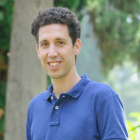
Adrain Jaeggi is an evolutionary biologist with a keen interest in the evolution of human behavior and cognition. He has studied different aspects of culture and cooperation in several nonhuman primate species and is currently extending his research to humans. His main focus is on the behavioral ecology and evolutionary psychology of cooperation in a population of Amazonian forager-horticulturalists, the Tsimane. More specifically he is investigating the origins of social inequality and its influence on cooperation patterns, how people make decisions about cooperative acts with different social partners and whether these decisions are consistent with evolutionary theory and actually observed behavior. Dr. Jaeggi was featured on an episode of NPR's "All Things Considered" on March 1, 2013.

Corina Logan

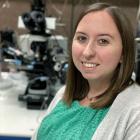
Corina Logan’s research integrates evolutionary biology, behavior, and cognition to understand the evolution of cognition in the field and lab. She has a BS degree in biology from the Evergreen State College where she studied tropical animal behavior, and a PhD in experimental psychology from the University of Cambridge where she was a Gates Scholar researching social cognition in the crow family. Corina is investigating whether small brained birds possess sophisticated cognition, whether innovation requires sophisticated cognition, and how innovation and cognition evolve in the wild using a highly innovative bird, the great-tailed grackle (Quiscalus mexicanus), as a model system. Her work is funded by the SAGE Center and the National Geographic Society Waitt Grant. (Photo © Julia Leijola)

Fabian Soto

Fabian Soto received a B.S. in Psychology from the University of Chile in 2005 and a Ph.D. in Psychology from the University of Iowa in 2011. His main line of research focuses on uncovering the mechanisms of learning and generalization at work in object categorization and causal learning. His approach involves developing computational models of these processes, and testing them through behavioral and neuroimaging studies. His research to date has used both human and non-human animals as subjects, allowing him to answer questions about both the mechanisms and evolution of cognition

Footer Message

Copyright © The Regents of the University of California, All Rights Reserved.
UC Santa Barbara, Santa Barbara, CA 93106 • (805) 893-8000